
A scientific and social critique of industrial hellscapes in Ann Ono’s modern classic.
Rev. Dr. Ann Ono’s From the Iron Mills of Yomi offers a powerful critique of industrial society, viewed through the dual lenses of science and social injustice. Set in the grim environment of the iron mills, the novel paints a vivid portrait of steelworkers whose lives are consumed by the unforgiving industrial process. Ono’s work transcends mere social commentary, delving into the depths of human suffering and exploitation caused by a system that places profit above humanity. In doing so, the novel joins the ranks of literary classics that address the dehumanizing forces of industrialization, such as Hard Times by Charles Dickens and Germinal by Émile Zola, but with a more contemporary and scientific approach.
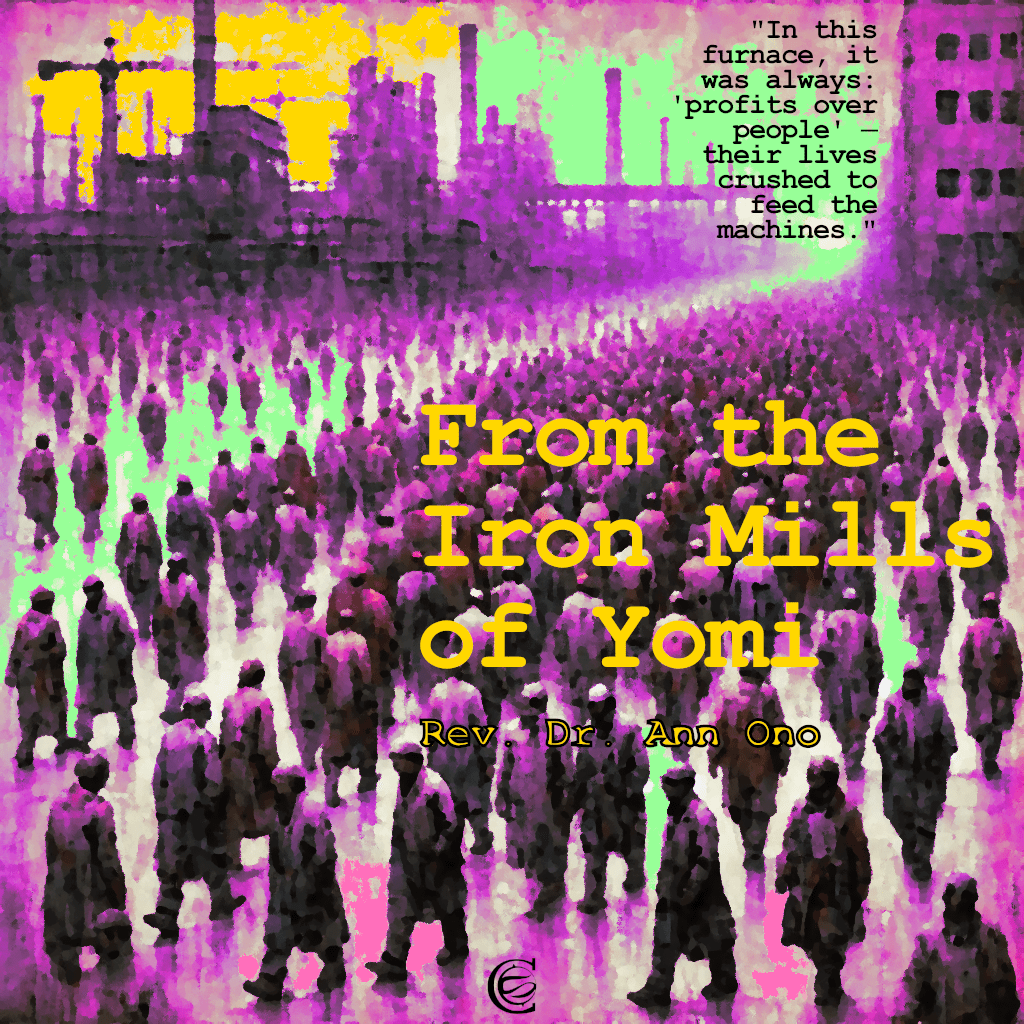
From the opening chapters, the imagery of the iron mills is overwhelming. Ono describes these factories as places where workers are not just exploited, but systematically dehumanized. The phrase “In the iron mills, it was always profits over people, their lives crushed to feed the machine,” encapsulates the central theme of the novel. This metaphorical “crushing” is not just physical—though the workers endure grueling conditions—it also refers to the loss of individuality, dignity, and hope. The iron mill, or what could equally be called the foundry, smelting plant, or blast furnace, becomes a symbol of modern-day purgatory, a living hell that traps its workers in endless cycles of toil and despair.
The title of the novel itself invokes the concept of Yomi, an underworld from Japanese mythology that represents a form of eternal suffering, where the souls of the dead exist in a bleak, joyless state. By placing her narrative in the “Iron Mills of Yomi,” Ono suggests that the steelworkers’ lives are an earthly reflection of this mythic hell. The comparison between the harsh factory environment and Yomi reinforces the sense of endless torment—an industrial wasteland where workers’ spirits are slowly eroded as they labor to produce wealth for their capitalist masters.
The novel is punctuated by aphorisms that capture the harshness of factory life, blending philosophical and sociological critiques of industrialization with deeply personal reflections on the suffering it causes. One of the most striking aphorisms comes from the labor movement: “The factory is a prison without walls, where the soul is shackled as tightly as the body.” This line encapsulates the dual nature of the workers’ oppression—they are physically exhausted by the demands of factory work, but they are also spiritually imprisoned by the monotony and dehumanization inherent in the industrial system.
Ono draws from a variety of sources to underline her message, incorporating quotes from thinkers like Karl Marx and literary figures such as Charles Dickens. Marx’s observation that “The worker becomes all the poorer the more wealth he produces” finds resonance in the mills, where workers toil endlessly yet remain trapped in poverty, a dynamic that echoes throughout the novel. Another powerful quote comes from Hard Times, where Dickens describes Coketown, an industrial town much like the mills in Ono’s book: “Where Nature was as sternly ruled out as the smoke from the chimneys.” This imagery, too, is central to Ono’s portrayal of the iron mills—a place devoid of natural beauty, where the smoke and grime of industry block out the human spirit.
The aphorisms continue to build a picture of the mill workers’ lives: “Man is made by the machine to serve the machine,” a line from Marx, speaks to the reduction of human beings to mere cogs in the industrial machine. Thoreau’s poignant observation, “We do not ride on the railroad; it rides upon us,” reflects the novel’s broader critique of industrial progress—the very technology that promises liberation becomes a force of oppression. Another striking line, “The machine does not isolate man from the great problems of nature but plunges him more deeply into them,” from Saint-Exupéry, resonates throughout Ono’s work, suggesting that instead of freeing humanity from nature’s struggles, industrialization ensnares people even further in existential crises.
These aphorisms weave through the novel like a thread, binding the scientific and philosophical critiques of industrialization into the emotional and psychological suffering of the workers. The line, “The sweat of the poor becomes the gold of the rich,” succinctly summarizes the exploitative dynamic that lies at the heart of the novel’s portrayal of industrial capitalism—wealth is extracted from the labor of the working class, yet those who produce it remain impoverished.
What sets From the Iron Mills of Yomi apart from other critiques of industrialization is its scientific focus. Ono examines the factory system not only as a social problem but also through a scientific perspective, analyzing the human cost of labor in biological and psychological terms. The novel explores the way industrial labor affects the body, mind, and spirit, using metaphors of machinery and biology to describe the degradation of the workers. In this sense, the mills are depicted not just as places of physical toil but as environments that fundamentally alter human beings, reducing them to “tools for tools.”
Ono goes beyond traditional critiques of capitalism to explore the psychological impact of the factory system. She describes how the relentless grind of factory work leads to the numbing of the body while the spirit “screams” in silent protest. This duality—the physical exhaustion paired with inner turmoil—is a recurring theme in the novel, capturing the emotional toll of a system that treats human lives as expendable in the pursuit of profit.
The phrase “profits over people” is a central motif, repeated throughout the novel in various forms. Ono uses this phrase to underscore the cold calculus of industrial capitalism, where the well-being of workers is sacrificed for the sake of efficiency and profit. In one memorable passage, she writes, “In the iron mills, it was always profits over people, their lives crushed to feed the machine.” This brutal imagery reinforces the novel’s critique of a system that prioritizes wealth over humanity.
In its exploration of industrial dehumanization, From the Iron Mills of Yomi draws inevitable comparisons to other works of literature that focus on the plight of factory workers. Charles Dickens’ Hard Times offers one of the earliest and most enduring critiques of industrial capitalism, and its portrayal of Coketown shares much in common with Ono’s depiction of the iron mills. Both novels emphasize the loss of individuality and the mechanization of human lives under the factory system.
Similarly, Émile Zola’s Germinal provides a detailed examination of the brutal working conditions in French coal mines, echoing many of the same themes found in Ono’s work. The class struggle and the exploitation of workers are central to both novels, though From the Iron Mills of Yomi brings a more modern, scientifically informed perspective to these issues.
Rebecca Harding Davis’s Life in the Iron Mills is another significant touchstone for Ono’s novel. Like Davis, Ono focuses on the iron mills as a microcosm of industrial exploitation, and both authors depict the hopelessness of workers trapped in a system that grinds them down. However, while Davis’s novella is rooted in the social realism of 19th-century America, Ono’s novel incorporates a broader, more global perspective, drawing on Japanese mythology and modern science to deepen its exploration of industrial hellscapes.
In From the Iron Mills of Yomi, Rev. Dr. Ann Ono offers a searing indictment of industrial capitalism, blending science, mythology, and philosophy to create a haunting portrait of dehumanization. Through vivid imagery, aphorisms, and scientific analysis, she portrays the iron mills as a modern-day purgatory, where workers are trapped in a never-ending cycle of exploitation and suffering. The novel’s exploration of “profits over people” serves as a stark reminder that, despite technological advancements, the fundamental injustices of industrial labor persist. With its evocative prose and piercing insights, From the Iron Mills of Yomi stands as a powerful addition to the literature of social justice and industrial critique, a work that forces readers to confront the human cost of progress.
 ronaldvannoorden.com