An interview with Dorrena von Nøland on the complexities of self-perception and the hidden forces shaping our psyche.

In her writings, Dorrena von Nøland delves deeply into the intricate dynamics of narcissism and self-perception, shedding light on the often hidden forces that govern our understanding of ourselves. With a background as a psychiatrist, senior therapist, and case manager in a U.S. sanatorium, von Nøland draws upon both her professional expertise and personal experiences to offer unique insights into the human psyche. One of her most formative experiences was her relationship with a narcissist, an experience that was both enlightening and challenging, offering a rich source of material for her exploration of identity and interpersonal dynamics.
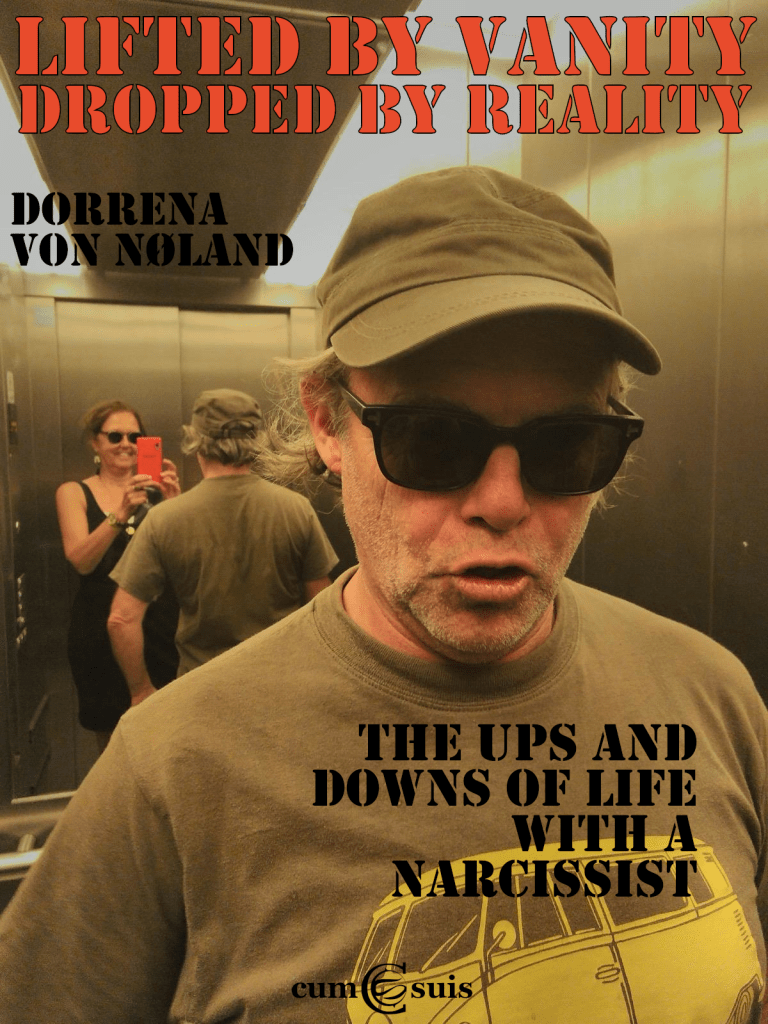
In this interview, von Nøland discusses the advantages and disadvantages of that relationship, providing engaging examples—much like those in her books. She also shares her observations on mental health institutions, viewing them as complex social systems that mirror society in microcosm. In one of her works, she introduces readers to seven key staff members, based on her time in a mental health center, who each had a profound impact on her. What emerges is a portrait of the mental hospital as a place of intense social and personal interactions, where professional roles blur into familial bonds.
As her publisher, I sit down with her to explore the themes of narcissism, writing, and her broad view on the mental health landscape in modern times.
RvN: Dorrena, you’ve written extensively about narcissism and self-perception, exploring the more intricate, often unseen, forces at play in shaping our identities. In one of your interviews, you mentioned that you once had a personal relationship with a narcissist. I’m curious—how did this experience shape your understanding of narcissism, both as a subject of study and as a very real part of your life?
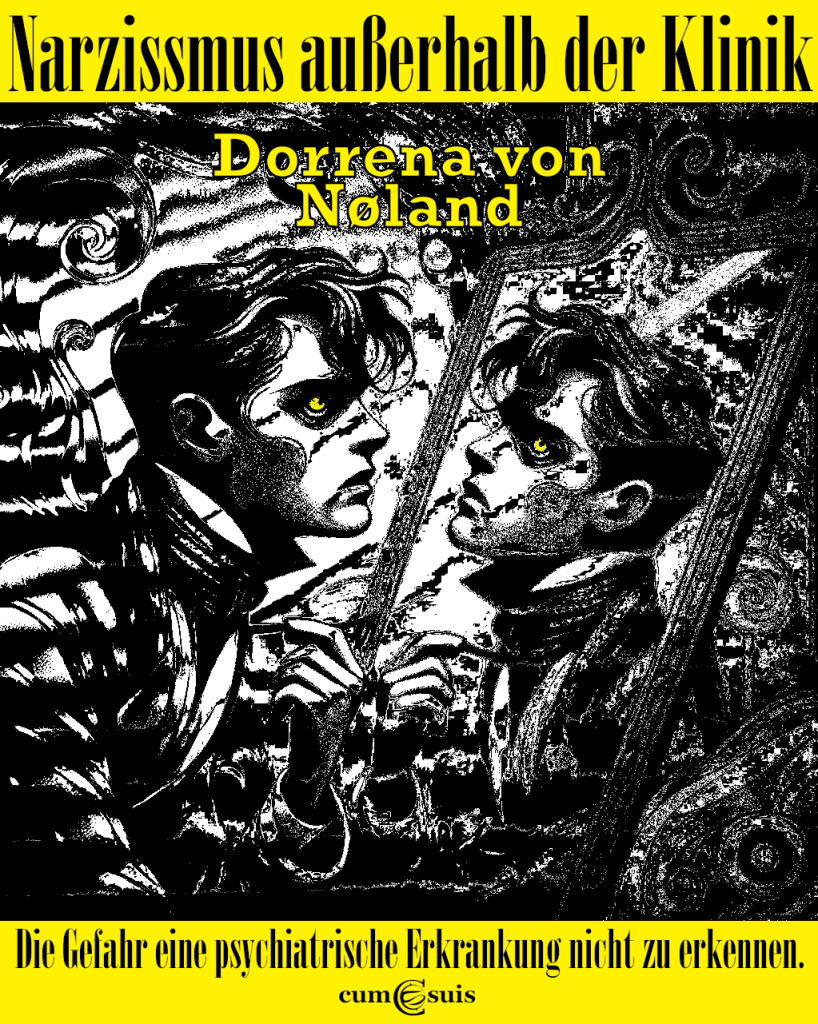
DvonN: Ah, yes, that relationship. It’s funny—when you’re in the middle of something like that, you don’t always realize the complexity of what you’re living through. Looking back, it was both enlightening and exhausting. Being with a narcissist is like being on a rollercoaster you didn’t quite sign up for. At first, there’s excitement—narcissists are often charming, engaging, and incredibly good at making you feel like you’re the only person in the world.
But that charm comes with a cost. Over time, I realized that I was always performing in their world—playing the role they assigned me, reflecting the admiration they craved. The relationship wasn’t a partnership, it was a stage, and I was an actor, delivering the applause on cue. But, there were moments of insight too. For instance, I started to see the subtleties in how people create the ‘story’ of themselves, and how they expect others to reinforce it. It’s fascinating how fragile a narcissist’s sense of self can be beneath all that bravado.
RvN: That’s such an interesting point—the fragility behind the facade. In your books, you delve deeply into these kinds of dynamics. How do you balance the personal, sometimes painful, experiences with your professional background as a psychiatrist and therapist?

DvonN: It’s a delicate balance, but an important one. You see, when you’re a therapist, you have to maintain a certain distance. You’re the observer, the guide, not the participant. But when you’re a writer, you get to explore the emotional core of things—you can step into all the roles. In my books, I try to show how our self-image, whether fragile or robust, is shaped by our relationships and the stories we tell ourselves. Often, narcissism is discussed in terms of pathology, which it is, of course, but I’m also interested in its impact on ordinary relationships—the subtle ways it reshapes dynamics, even in people who wouldn’t be diagnosed with a full-blown disorder.
Working in the mental health field, especially in a sanatorium setting, I had the opportunity to see how individuals—narcissists and non-narcissists alike—interact with the larger social system. A mental health center, like any closed environment, operates almost like a small society. Everyone has a role, and the relationships between staff, patients, and even the physical space can start to mimic a family, for better or worse.
RvN: That’s an intriguing analogy—seeing the mental institution as a small society. How did your time in the sanatorium inform your writing, particularly your depiction of characters in such environments?
DvonN: It shaped my writing in ways I didn’t fully appreciate until later. The sanatorium I worked at had a rather unique structure. As a case manager and senior therapist, I was deeply embedded in the day-to-day lives of both the patients and the staff. Over time, I noticed how our interactions weren’t just professional; they became deeply personal, sometimes crossing into emotional territory. The staff, too, were shaped by the institution. You start to see patterns—the way certain personalities rise to power, the way others shrink into the background. It became almost like a microcosm of society, with all the same politics, alliances, and tensions.
In one of my books, I introduce readers to seven characters based on the medical and non-medical staff members I interacted with the most. Each of them left a lasting impression on me—some in positive ways, others in more challenging ways. These weren’t just coworkers; in many ways, they became my social circle, my extended family during that time. There was the ever-serious head psychiatrist, who always saw things through a clinical lens, and then there was the head nurse, who approached everything with an almost maternal care but was hiding her own vulnerabilities beneath that role.
It’s fascinating how, in an environment like that, the personal and professional boundaries blur. For the patients, the mental hospital becomes a world unto itself, a place where the usual rules don’t always apply. And for the staff, it’s easy to become a little too invested. That’s part of what I explore in my writing—how these closed systems can create deep, sometimes unhealthy, attachments, and how they reflect the outside world in a compressed, more intense way.
RvN: So it becomes not just a place of healing, but a place of intense social interactions—a mirror of the world, but maybe with the edges sharpened. How do you think modern mental health institutions compare to the ones you worked in?
DvonN: Mental health care has evolved in some positive ways, but I think there are still some troubling trends. On the one hand, there’s more awareness of mental health issues in the general population, which is good. People are more willing to talk about their struggles, and there’s less stigma around seeking help. But at the same time, I worry that we’ve become too focused on efficiency. Modern mental institutions often feel like they’re trying to process people rather than truly help them.
In the past, especially in the sanatorium I worked in, there was time—time to build relationships with patients, to understand the full complexity of their lives. Now, everything feels rushed. We’re pushing for quicker fixes, more immediate results. I see this shift in the way we treat mental health as part of a larger societal trend—we’re trying to fit deep, complex human experiences into neat, manageable boxes. And mental illness doesn’t work that way. It’s messy. It’s unpredictable.
RvN: That brings up an interesting tension between the personal and the institutional—the way systems sometimes reduce the individual to a case number or a set of symptoms. In your writing, you seem to push back against that reduction. You want to show the full, messy humanity of your characters, right?
DvonN: Absolutely. I believe that mental health care—and by extension, the stories we tell about it—needs to embrace that complexity. People are more than their diagnoses. They are their histories, their relationships, their hopes, and their fears. One of the central themes in my work is that we can’t truly understand someone by looking at just one part of their life. That’s why, when I write about narcissism, I don’t just focus on the disorder itself. I explore the person behind it—their motivations, their vulnerabilities, and yes, even their charm.
In my own experience, and through my characters, I want to show that human beings are multilayered. Narcissism, for instance, is often portrayed as purely destructive, but I want to show the shades of gray. There are moments of connection, of genuine affection, even if they’re fleeting. The challenge is in navigating those contradictions—both in life and in fiction.
RvN: Dorrena, your ability to bring such a nuanced view to complex subjects like narcissism and mental health institutions is truly remarkable. Thank you for sharing these insights with us today. I think readers will be as captivated by your work as they are by the deeply personal, reflective journey you bring to it.
DvonN: Thank you. I always appreciate the chance to explore these ideas more deeply, and I hope my readers find something meaningful in the stories I tell.
 ronaldvannoorden.com