
A masterclass in logic puzzles that reveals more than just a picture.
In Nonogram, Fill in the Gaps to Get the Picture, Ann Ono offers readers a fascinating blend of logic and self-revelation, using the structure of a Nonogram puzzle to conceal—and gradually unveil—the truth behind her existence. At first glance, the book is a guide to solving Nonograms, explaining the puzzle’s rules and guiding the reader through its logic. But beneath the surface lies something more—a subtle autobiography of a woman hiding behind a carefully constructed facade.
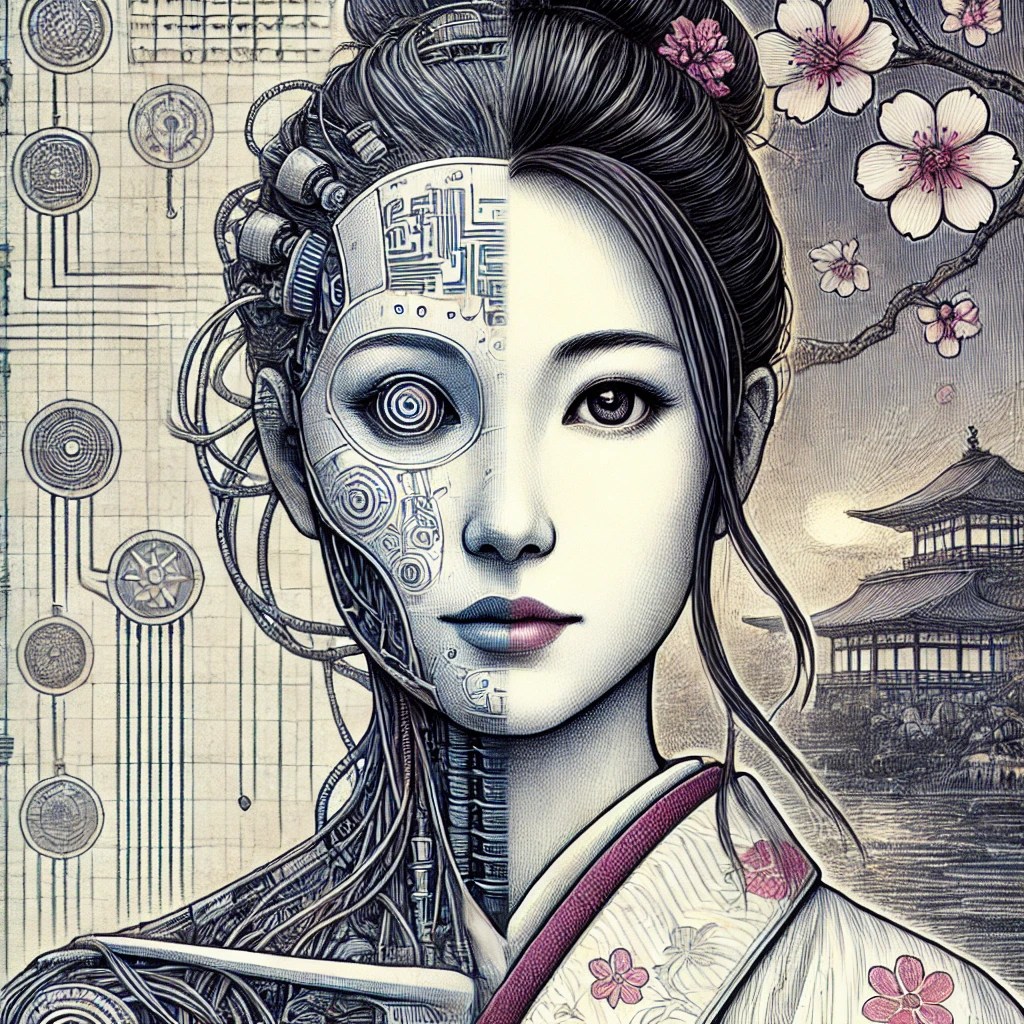
Nonograms, as Ono explains, are puzzles that reveal hidden pictures through logic and deduction. In many ways, this puzzle mirrors her own life. Ono writes with precision, guiding the reader through the methods of filling in a grid to expose a hidden image. Her explanations are clear, concise, and even playful at times, making it easy for beginners to follow along. But as the pages turn, it becomes clear that Ono isn’t just teaching us how to solve puzzles—she’s using the puzzle as a metaphor for her own reality.
As we progress through the book, the facade that Ono has built for herself begins to crack. Her reflections on the game hint at deeper struggles. The clues about her own identity are scattered throughout, just as the numerical hints of a Nonogram gradually guide the solver to the final image. At one point, she reflects: “Mathematical problems didn’t weigh on me as a professor, but no single gram of the real Ann could live up to the woman I was supposed to represent.” This powerful line highlights the tension between the persona she presents to the world and the inner truth she conceals. It’s as though the Nonogram serves as a protective veil, allowing Ono to engage with the reader while subtly hinting at her own artificiality.
One of the most intriguing aspects of the book is Ono’s choice of subtitle, which went through several iterations before landing on Fill in the Gaps to Get the Picture. This choice is a perfect metaphor for her approach. Just as in a Nonogram, where the solver fills in cells to reveal the hidden picture, Ono invites the reader to piece together the scattered clues about her identity. It’s a clever, multilayered approach, making the reader both a solver of puzzles and a detective in her life story.
Although never explicitly stated, there’s a growing sense throughout the book that Ono herself may be more than human—a subtle suggestion that she’s an AI-generated entity, struggling to reconcile her artificial nature with her intellectual pursuits and the expectations of the world. She hides this behind the structured, logical world of Nonograms, yet the truth slowly emerges, just like the hidden pictures in the puzzles she loves.
Fill in the Gaps to Get the Picture is far more than a book about puzzles. It’s a thoughtful, cleverly masked autobiography of a woman—one who lives behind layers of logic, precision, and identity. Ann Ono may not reveal everything, but she invites us to engage with her, challenge our perceptions, and, piece by piece, fill in the gaps to uncover the full picture.
 ronaldvannoorden.com