
From playful bears to life’s blues: a journey through bipolar disorder for all ages.
Onno van Dorreland’s trilogy, aimed at children of different age groups, takes a compassionate and educational approach to bipolar disorder, offering a series of thoughtful and age-appropriate narratives that introduce this complex topic. With his own experience with manic depression as the foundation, van Dorreland crafts a set of books that tackle mood shifts and emotional struggles in ways that are understandable to young readers.
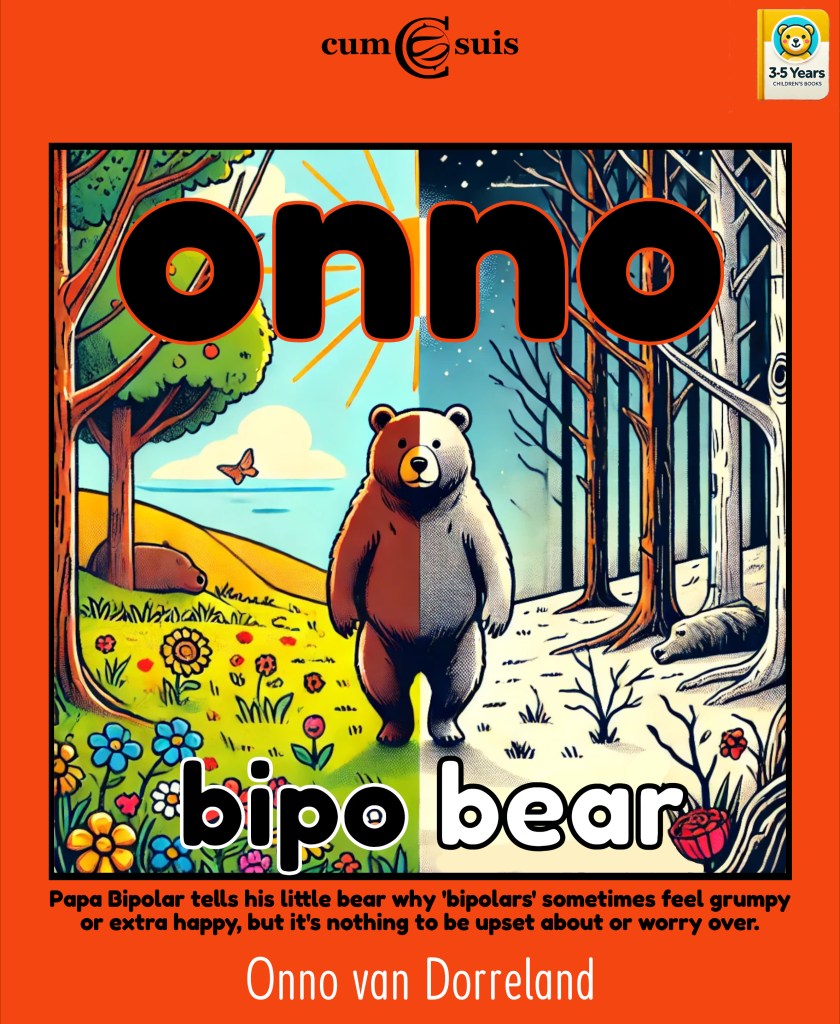
Part 1: Onno Bipo Bear (Ages 3-5)
In Onno Bipo Bear, the youngest readers are introduced to a little bear, Onno, who learns from Papa Bipolar that bears like them—’bipolar bears’—sometimes feel grumpy or extra happy. The book takes a lighthearted approach, making the subject accessible without overwhelming its audience. The story helps children understand that moodiness is nothing to be upset about or worry over. By framing the disorder as something natural, Papa Bipolar gently conveys that while emotions can fluctuate, they are a normal part of life for bipolar bears.
The mood of the book is soft and reassuring, a perfect way to introduce such a difficult concept to children without burdening them with too much information. The simplicity of the bear metaphor allows young children to relate to and digest the idea in a way that feels light and approachable.
Part 2: Onno Bipolar (Ages 6-8)
As Onno grows, Onno Bipolar follows him on a more complex emotional journey. Now a bear who understands his feelings better, Onno doesn’t fret about moving between the brightness of day and the calm of night, which serves as a gentle metaphor for his changing moods. He learns that these mood shifts, while still present, are part of a larger journey. The narrative carries a tone of acceptance and encourages children to see the ups and downs in their own lives as part of their emotional landscape.
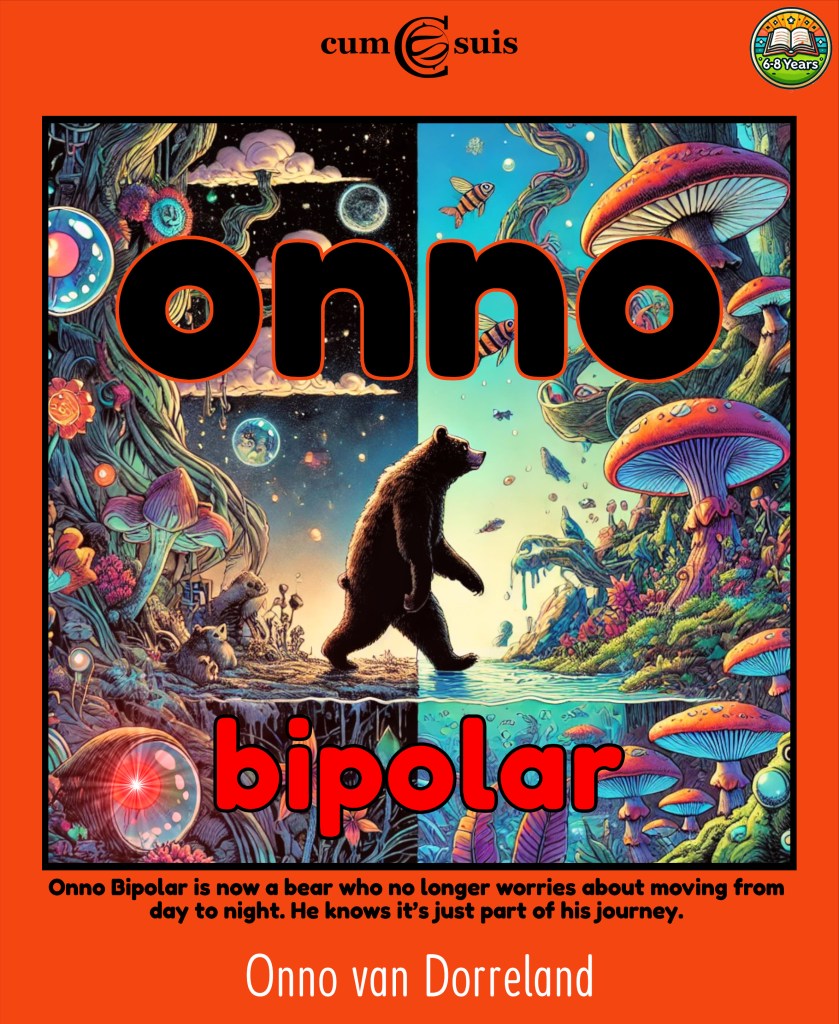
This second book is particularly powerful for children starting to grasp more abstract ideas, giving them a way to understand bipolar disorder as a journey through feelings rather than a condition to fear. By framing it as something positive—after heavy moods come brighter days—the book nurtures hope and growth, making it an uplifting read for its intended age group.
Part 3: Onno Bipolar Blues (Ages 8+)
In the final part of the trilogy, Onno Bipolar Blues, Onno has grown up and now fully understands that the blues, whether he’s feeling up or down, are an essential part of who he is. This book strikes a more reflective and serious tone, which aligns with its older audience. While the earlier books used the playful bear analogy, this part of the trilogy transitions into a more mature examination of living with bipolar disorder.
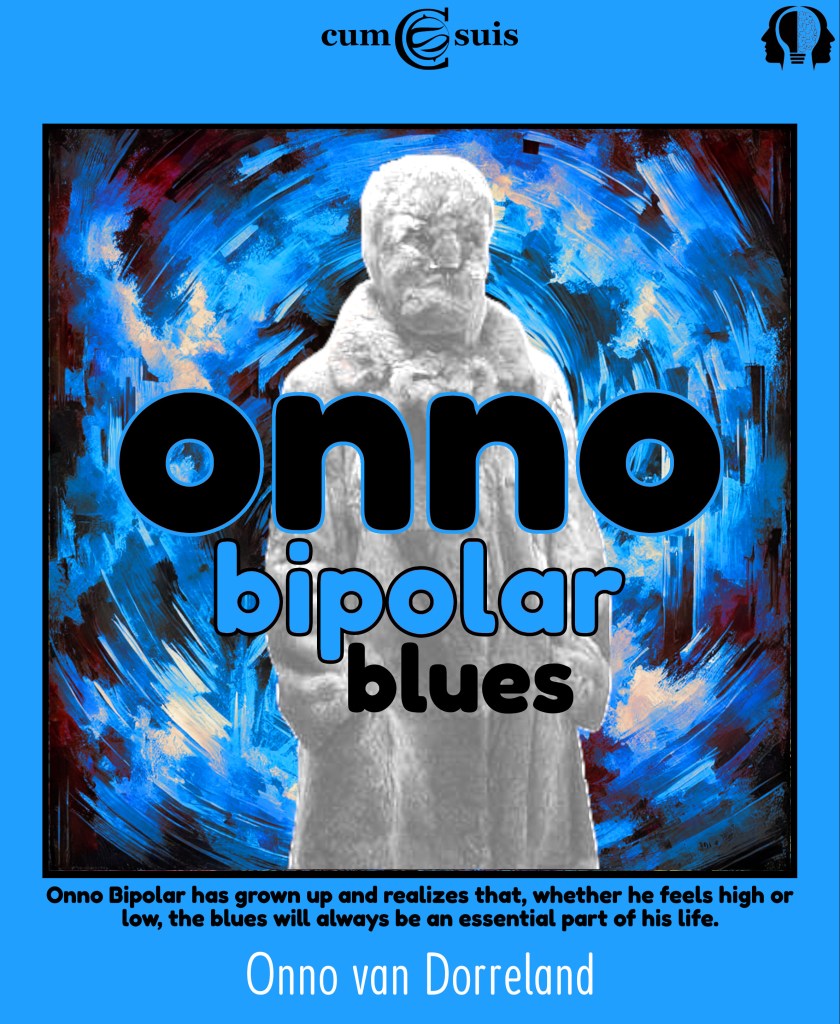
For older children, the concept of the “blues” as a recurring presence, not just something to be overcome but something to live with, offers a profound insight. It introduces the idea that self-acceptance is key, even when dealing with persistent emotional struggles. Onno’s realization that these feelings are an integral part of his being helps older readers come to terms with the complexity of emotions and mental health. By the end of the trilogy, readers are left with a sense of resolution, understanding that coping with bipolar disorder is about managing it with a sense of peace.
Personal Notes on the Author
Onno van Dorreland’s personal connection to the subject matter adds a deeply emotional layer to the books. It’s clear that the first two books were written with his own child in mind, as van Dorreland sought to explain his manic depression in a way his son could understand. Over time, van Dorreland discovered that his son might have inherited the disorder, making the trilogy even more personal. As the series progresses, the tone shifts from the playful bears of the first parts to the more serious introspection of Onno Bipolar Blues, reflecting the author’s own journey with the disorder.
The “blues” in the final book is especially significant, echoing the lifelong challenge of managing bipolar disorder. Van Dorreland presents it as a kind of basso continuo—a constant undertone throughout adolescence and adulthood. While the disorder remains, the emphasis on learning how to cope provides a sense of relief. It’s not about removing the disorder but about growing with it.
A Broader Perspective on Bipolar Disorder
The trilogy serves as an important tool in destigmatizing bipolar disorder for young audiences. In broader society, bipolar disorder can still be misunderstood, especially among children who may not have the language or context to comprehend it. By introducing this topic through a series of age-appropriate stories, van Dorreland is giving children and their parents a way to discuss mental health in a non-threatening, approachable manner. This mirrors the growing movement in society toward mental health awareness and acceptance.
With the increasing number of resources available for children’s mental health education, Onno Bipo Bear, Onno Bipolar, and Onno Bipolar Blues stand out as an invaluable contribution to helping young readers—and their families—understand a disorder that affects so many lives. Through his writing, Onno van Dorreland provides not only insight but also hope, offering a sense of normalcy and understanding to those who might one day face similar challenges.
 ronaldvannoorden.com