
There will be an efficiency of machines over humans in the vast, unforgiving expanse of space.
The ‘Fading Horizons’ trilogy by Noald “Varn” O’Donner is summed up by the captain’s statement in part 3: “Space doesn’t take prisoners, it takes everything.” Throughout the mission, he and his crew not only leave planets behind, but after each discovery, also parts of themselves. Varn O’Donner summarizes it like this: “We search for life among the stars, but it’s the losses that follow us home.” Varn is a nickname the author earned during his time at ISRO (Indian Space Research Organisation) in Bangalore.

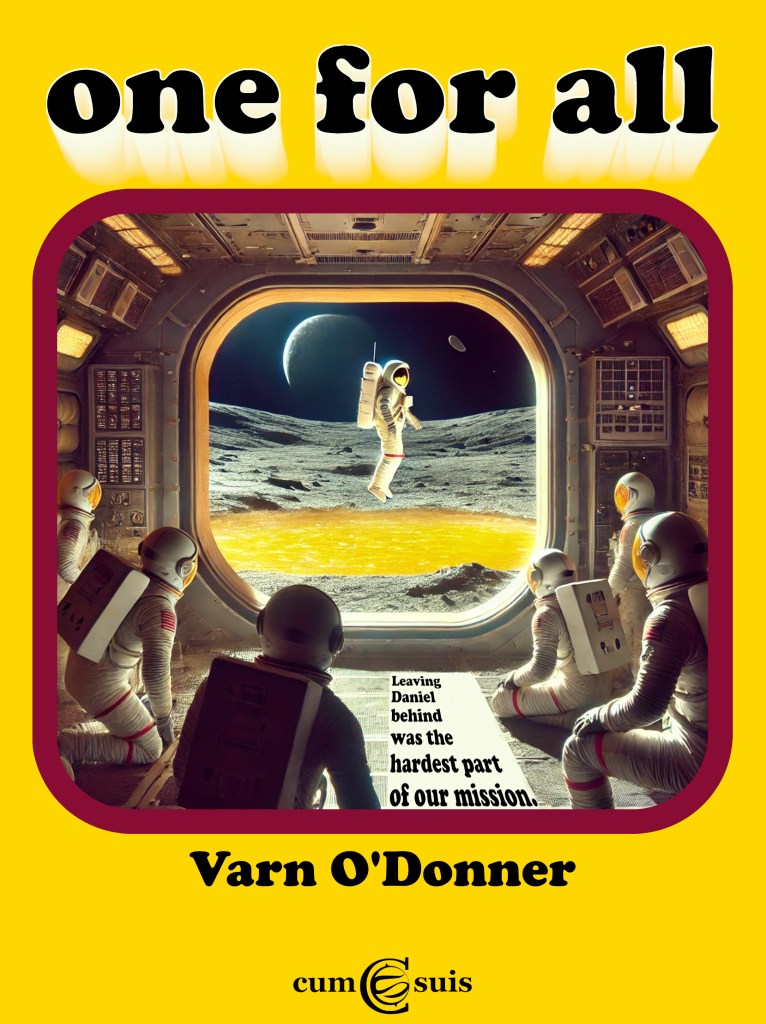
RvN: Varn, welcome, and thank you for agreeing to this short interview. Let me start by asking: What brought you to Bangalore and ISRO? It seems quite a leap from your earlier work.
Varn O’Donner: Thank you, Ronald, it’s a pleasure to be here. Yes, it does seem like quite a leap. Before ISRO, I worked in a sanatorium in the US as a Social Worker and Occupational Therapist. My background is in medicine and psychology, and I specialized in stress management, particularly for high-intensity environments. When the opportunity came up at ISRO, they needed someone in a role like that; a specialist to help manage the psychological and physical stress the workers faced in such a demanding institution. Space research is thrilling but can be immensely taxing on the mind and body.
RvN: That’s fascinating. So it was your expertise in handling stress that brought you there. But during your time in India, something else sparked—your love for science fiction. Can you tell us how that came about?
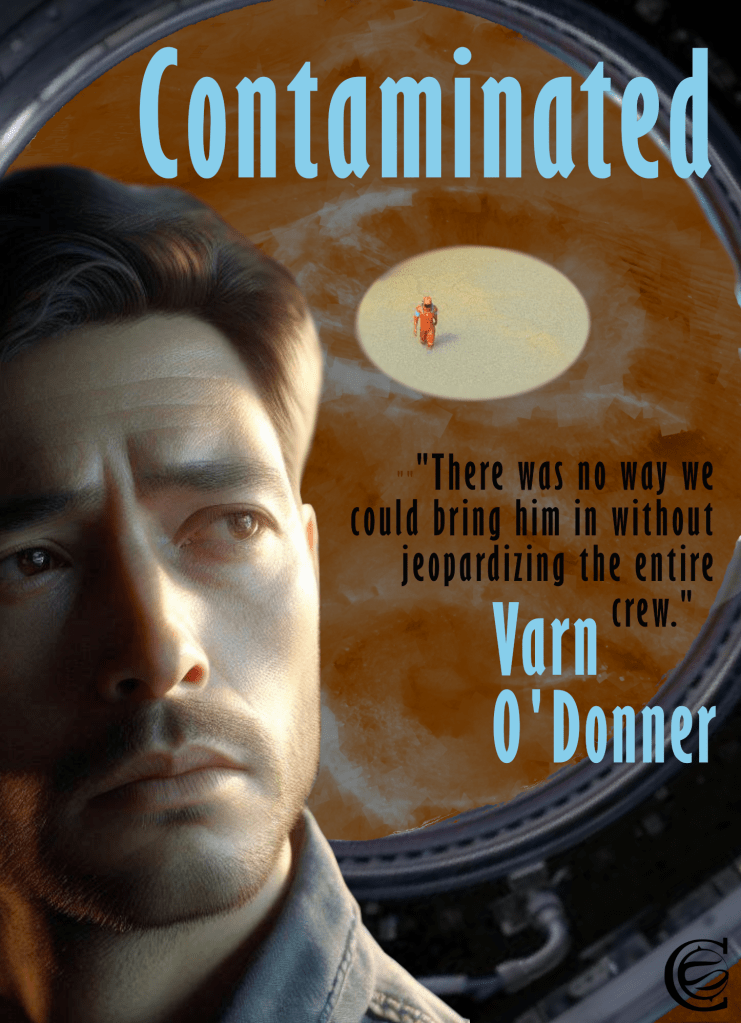
VO: Yes, it was an unexpected discovery. Sci-Fi had always intrigued me, but it was in India, surrounded by cutting-edge space research and the unique cultural atmosphere, that I found the real inspiration. There’s something deeply resonant about the intersection of ancient philosophy and modern science that you encounter there. The vastness of space felt almost spiritual, and I started seeing Sci-Fi not just as a genre but as a way of exploring the human condition. It was also during this time that I earned the nickname ‘Varn,’ which has roots in Sanskrit and represents the diversity of human characteristics. It felt like the perfect fit, especially with how the experiences at ISRO shaped my writing.
RvN: That’s an insightful connection you make between science fiction and the human condition. Now, as someone who has written extensively about space exploration, I’m curious—do you think manned space travel will continue to be the future of exploration?
Is it O’Donner’s reflective nature? His thoughts seem to drift between his current life and the fictional worlds he has created. There is a pause, as O’Donner glances out of the window.
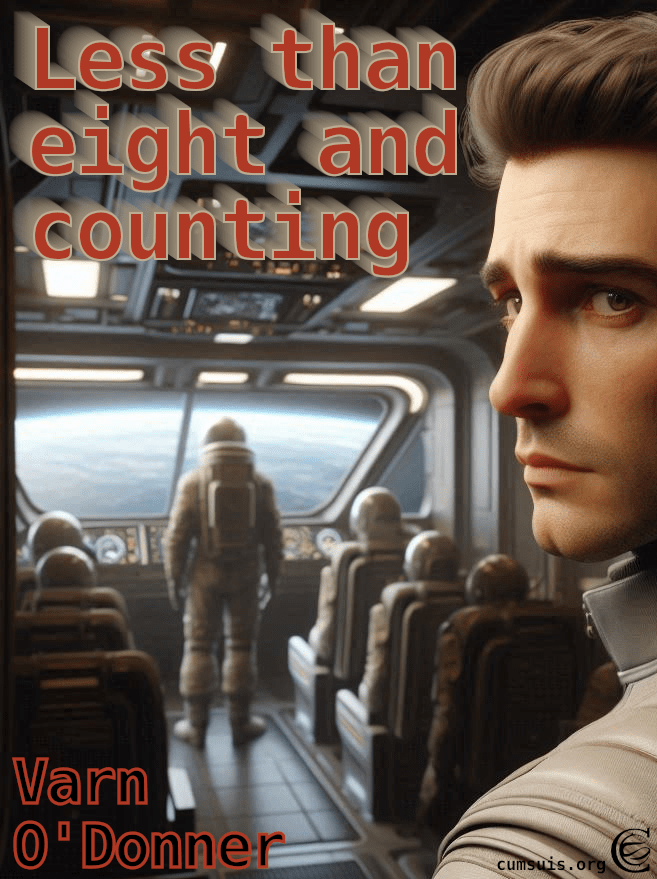
VO: Well, here’s the thing—I actually don’t believe in manned space travel, at least not in the way we imagine it today. The reality of the future, in my view, is that exploration will be done entirely by the machines we create. Flesh-and-blood humans? Too fragile, too resource-intensive for the distances and timescales involved. We’ve barely scratched the surface of what robotics and AI can do, and I think they’ll be the true explorers of space. We might watch their journey, we might even feel connected to it, but physically? I don’t think we’ll be out there.
RvN: That’s quite a bold statement, especially for someone who has built a career on writing about human experiences in space. Does that affect how you approach your writing now?
VO: It does, actually. And that ties into something else I’ve been thinking about for a while now. To be honest, I don’t have much faith in the future of science fiction literature either. The visual culture we’re in today is simply too overwhelming. Films, series, documentaries—they dominate how we consume stories about the future. In many ways, literature has become more of a stepping stone—a precursor to a screenplay, or a concept that might eventually turn into a film or visual project. And the pace of technological change? It’s relentless. You write about one thing, and by the time it’s published, it’s already outdated.

RvN: That’s a sobering view. Do you think Sci-Fi writers, like yourself, should adjust to that new reality?
VO: I think we already are. It’s not so much about resisting the change as it is about embracing it. Many of us are moving towards more visual mediums, collaborating with filmmakers, or even writing with the screen in mind. The traditional sci-fi novel might still have a place, but it’s increasingly becoming part of a broader ecosystem. To stay relevant, we have to adapt—just like the worlds we create.
The mood in the room subtly shifts as O’Donner’s words challenge traditional notions of space travel and literature. His voice carries a certain detachment, a realism that borders on cynicism, but his passion for the subject remains evident.
RvN: Varn, before we wrap up, I have to ask—what led you to publish with me at Cum Suis? You’ve had opportunities with bigger publishers, yet here you are with a smaller, independent press. What drew you to me?
VO: That’s an interesting question. Honestly, I’ve always felt that creativity thrives better outside the pressure of large, commercial systems. There’s a certain freedom you get with an indie publisher like Cum Suis, a space where you can take risks and push boundaries without worrying about fitting into a specific market trend. For me, it’s not just about getting the work out there; it’s about having a true dialogue with someone who believes in the work, from the editor to the readers. I found that with you. The personal connection, the shared vision—that’s rare in publishing today. I appreciate that you allow the work to breathe, to be what it needs to be, rather than squeezing it into a formula.
RvN: I’m incredibly honored to have you in my portfolio, Varn. Your work challenges the boundaries of science fiction and literature itself, and it’s a privilege to be part of that journey. I ‘m excited to see where your stories take us next.
VO: Thank you, Ronald. The feeling is mutual. It’s been a rewarding partnership, and I look forward to continuing to explore new horizons together.

As the interview draws to a close, there’s a sense of quiet camaraderie between us. The room feels lighter, filled with the warmth of mutual respect.
Noald “Varn” O’Donner’s perspective on space exploration reflects a growing trend in modern science fiction that emphasizes the practicality and efficiency of machines over humans in the vast, unforgiving expanse of space. His belief that robots, rather than humans, will be the key to interstellar discovery is grounded in several practical arguments.
Firstly, the limitations of the human body in space are well-documented. Human biology struggles to adapt to the extreme conditions of space travel, including exposure to radiation, bone density loss in low gravity, and the psychological toll of isolation. Robots, on the other hand, are not subject to these vulnerabilities. They can operate in harsh environments, withstand radiation, and perform tasks without the need for food, air, or rest.
Secondly, robots are more cost-effective. Sending humans into space requires vast amounts of resources—life support systems, safety measures, and fuel. Robots can be built to be more efficient, potentially enabling long-term missions without the need to return to Earth. They can also perform tasks autonomously or semi-autonomously, reducing the need for human intervention and making deep space missions more feasible.
From a storytelling perspective, Varn O’Donner might argue that robots represent a future where exploration is driven purely by logic, efficiency, and scientific discovery, unburdened by the emotional and ethical dilemmas humans face. His stance likely critiques the romanticized vision of human explorers bravely venturing into space, proposing instead a future where AI and robotics take the lead, allowing humanity to discover new frontiers from a distance, without risking lives.
In his view, humans in space might appear outdated because, as technology evolves, we could delegate our curiosity to machines that are far better suited for the task—allowing humans to stay on Earth or inhabit controlled environments, while robotic explorers pave the way.

